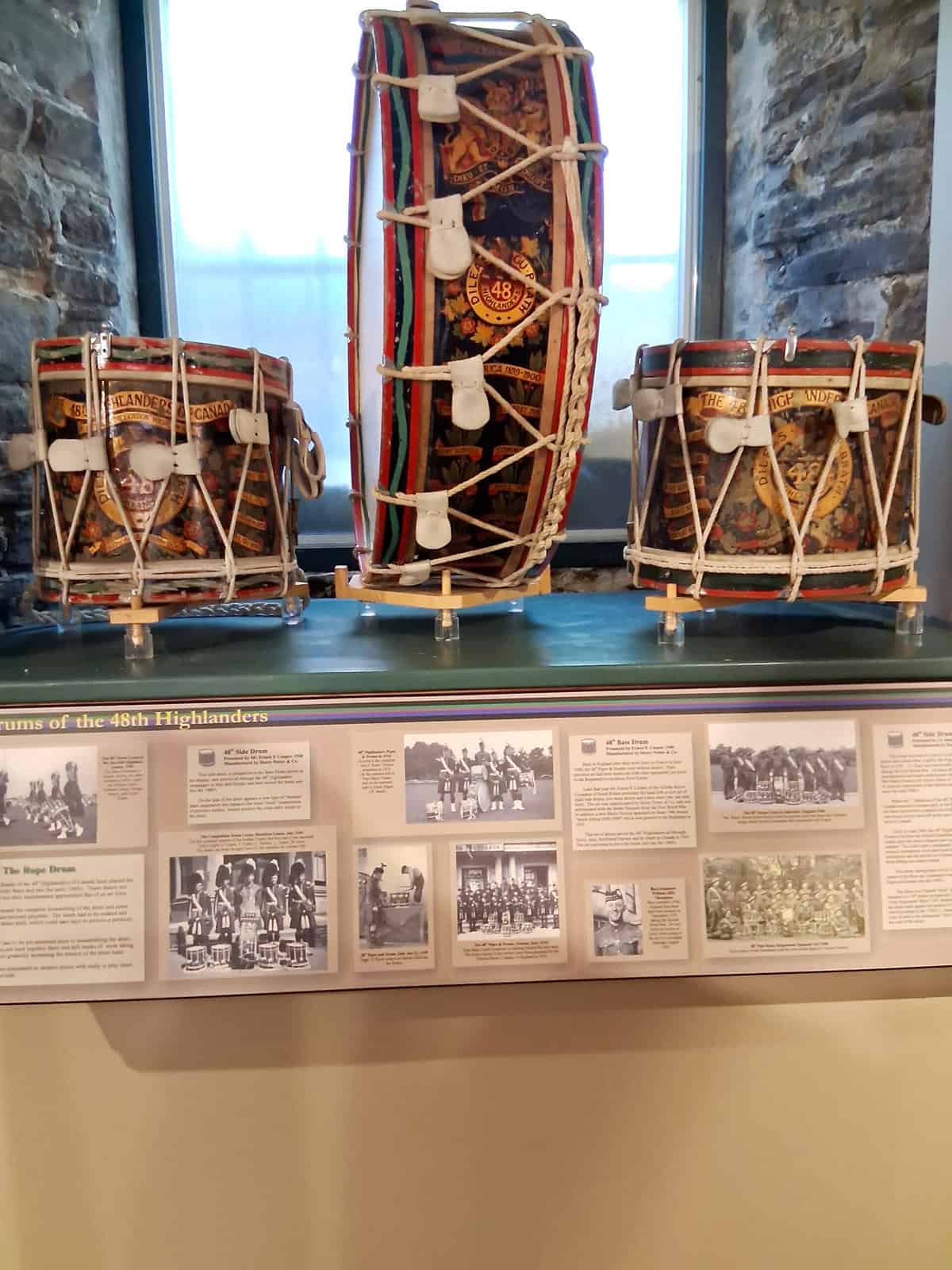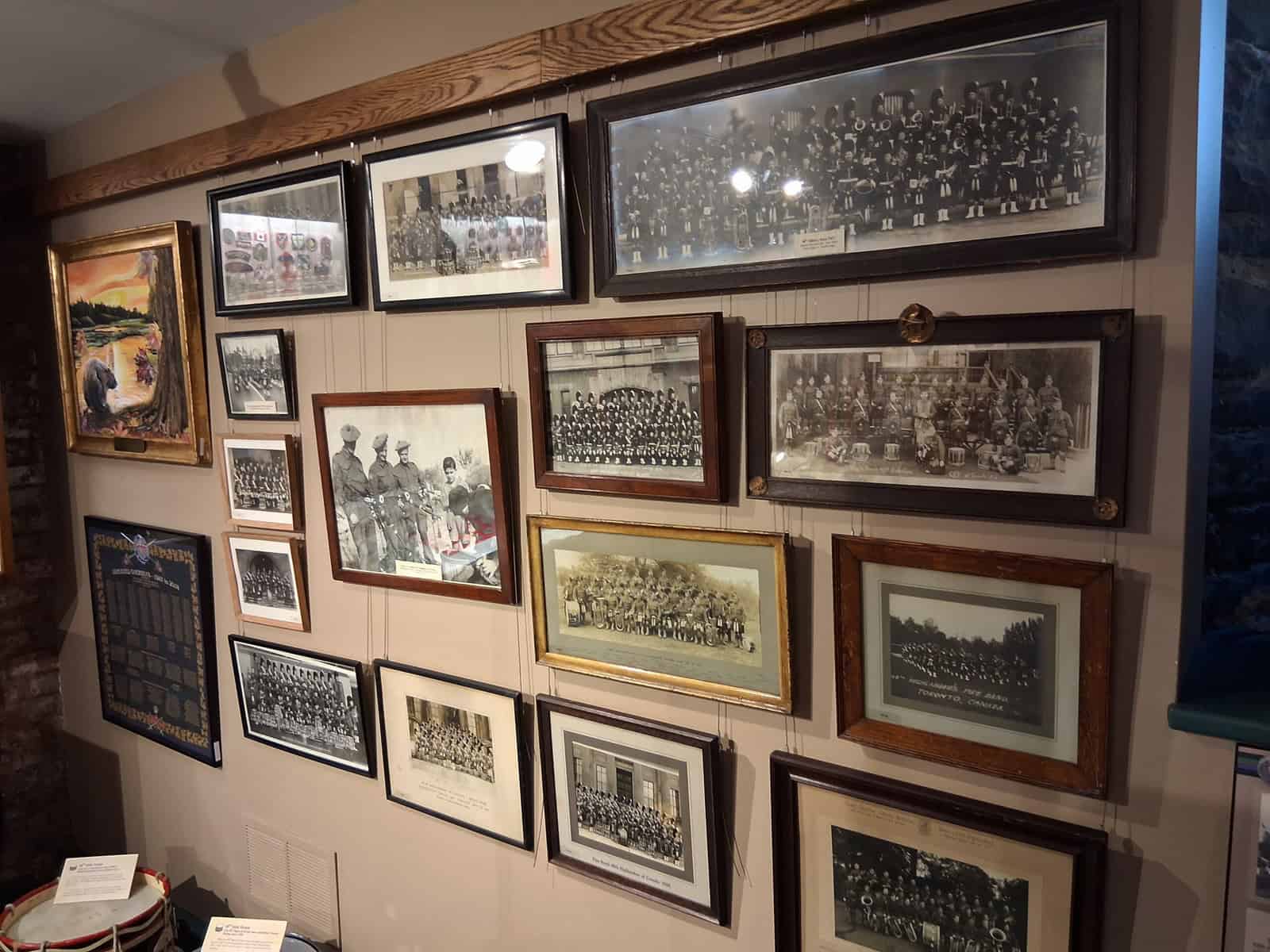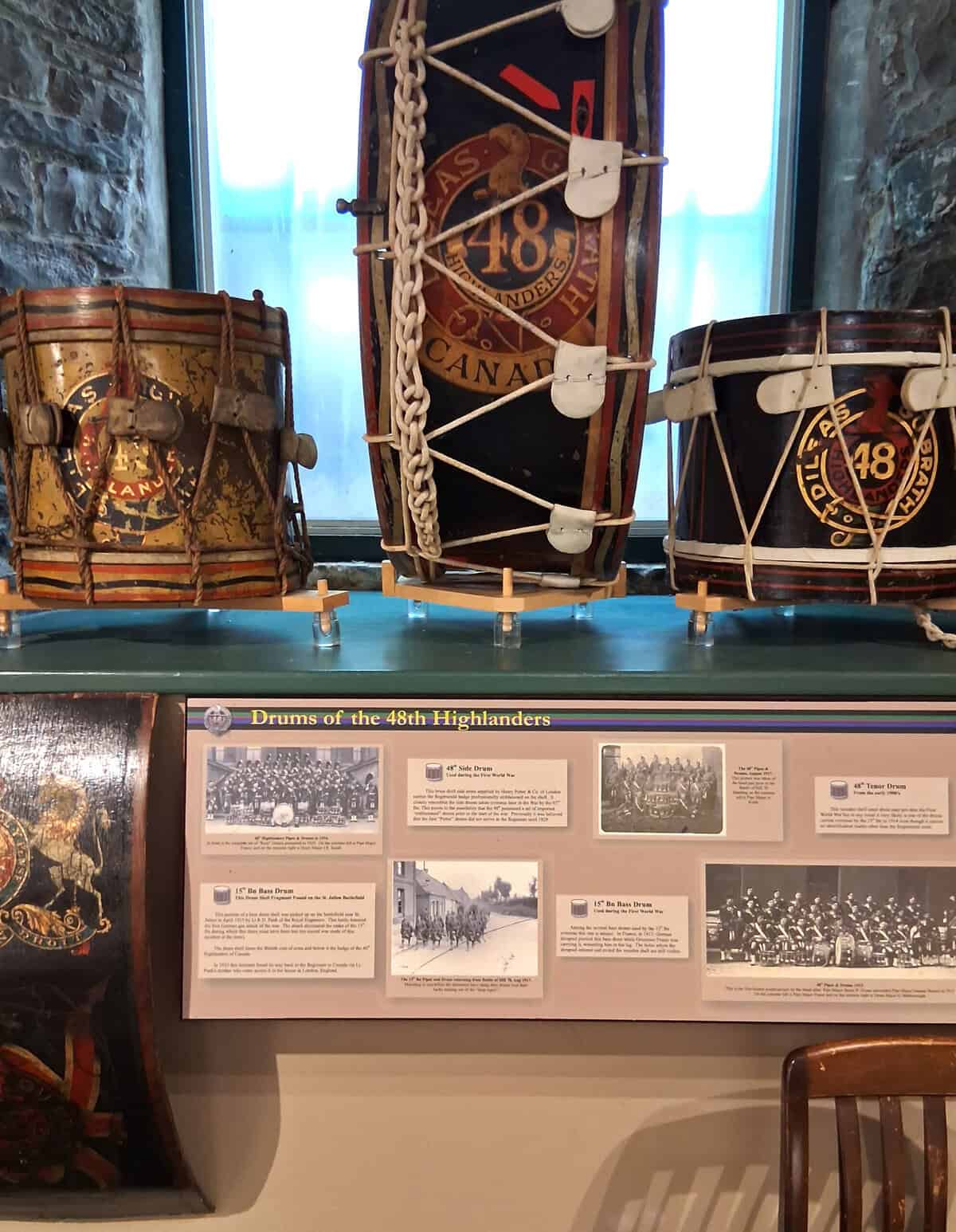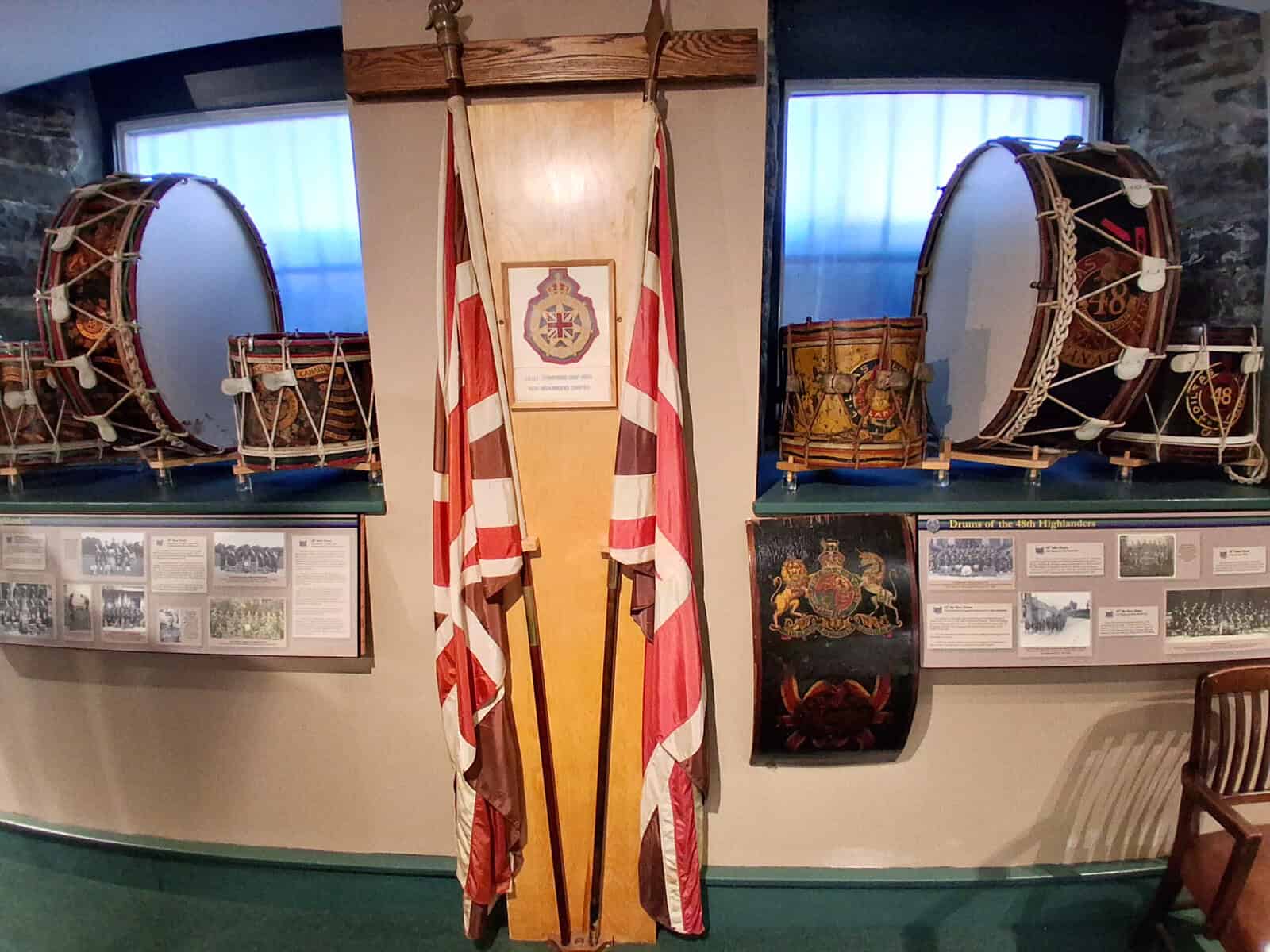
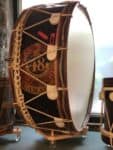
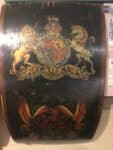
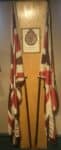
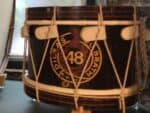
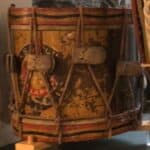
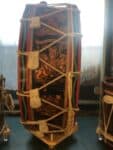
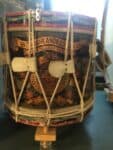
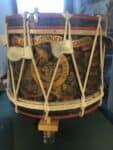
Drums have kept armies marching is step for millennia and form the backbone of any band. The drums presented here tell a tale of the 48th Highlanders in peace and war keeping the beat over the Regiment’s more than a century of history.
The first drums of the 48th were purchased from local music stores and not of a military design. Prior to the First World War and until the 1950s, military style rope drums were played. In the post war, rope drums have given way to rod tension drums.
Three types of drums are and have been used by the various bands of the 48th Highlanders. Base drums set the tempo of the music being played. Snare or Side drums compliment the tune. And the Tenor drums, in the manner they are played, create the eye-catching show.
Pipers and Drummers in WW 1
In the First World War, the pipes were taken to the front lines where they served a vital purpose. Pipers were tasked with playing traditional tunes to rally troops as they advanced across no man’s land. This was a perilous role, as the pipers’ distinctive silhouettes and loud music made them prime targets for enemy machine gunners and snipers. Pipers of the 15th Battalion (48th Highlanders) took their pipes into the trenches during the Somme offensive and at Vimy Ridge and Passchendaele. Beyond their musical role, pipers and drummers served as stretcher bearers. Their non-combatant status made them invaluable in retrieving the wounded from the battlefield. The high casualty rate among pipers highlights their bravery and the critical role they played.
Pipers and drummers in WW 2
The role of pipers evolved in the Second World War due to modern, long-range weaponry. While they were still a powerful symbol of regimental identity and morale, their presence on the front lines was more restricted. However, they were still used to inspire troops in key moments. The tradition continued in Canadian Highland regiments, like the 48th Highlanders, who maintained their pipe bands throughout the war, using music to connect soldiers to their heritage and to bolster their fighting spirit. Pipers were assigned to companies to bring their inspiration to the troops. As in the previous war, pipers and drummers continued to serve in crucial support roles, as stretcher bearers and medics when not playing their instruments, highlighting their versatility and commitment to their comrades.