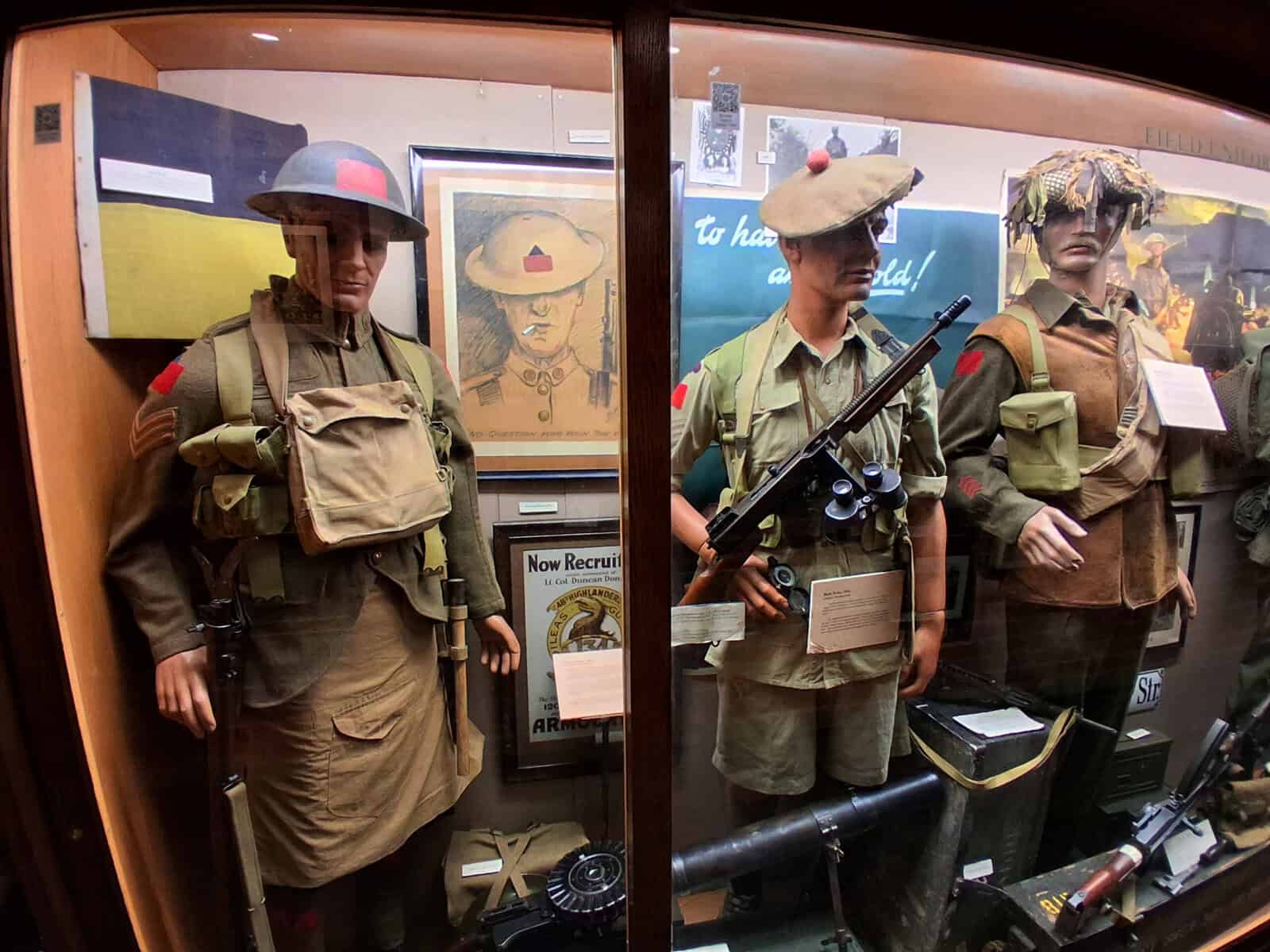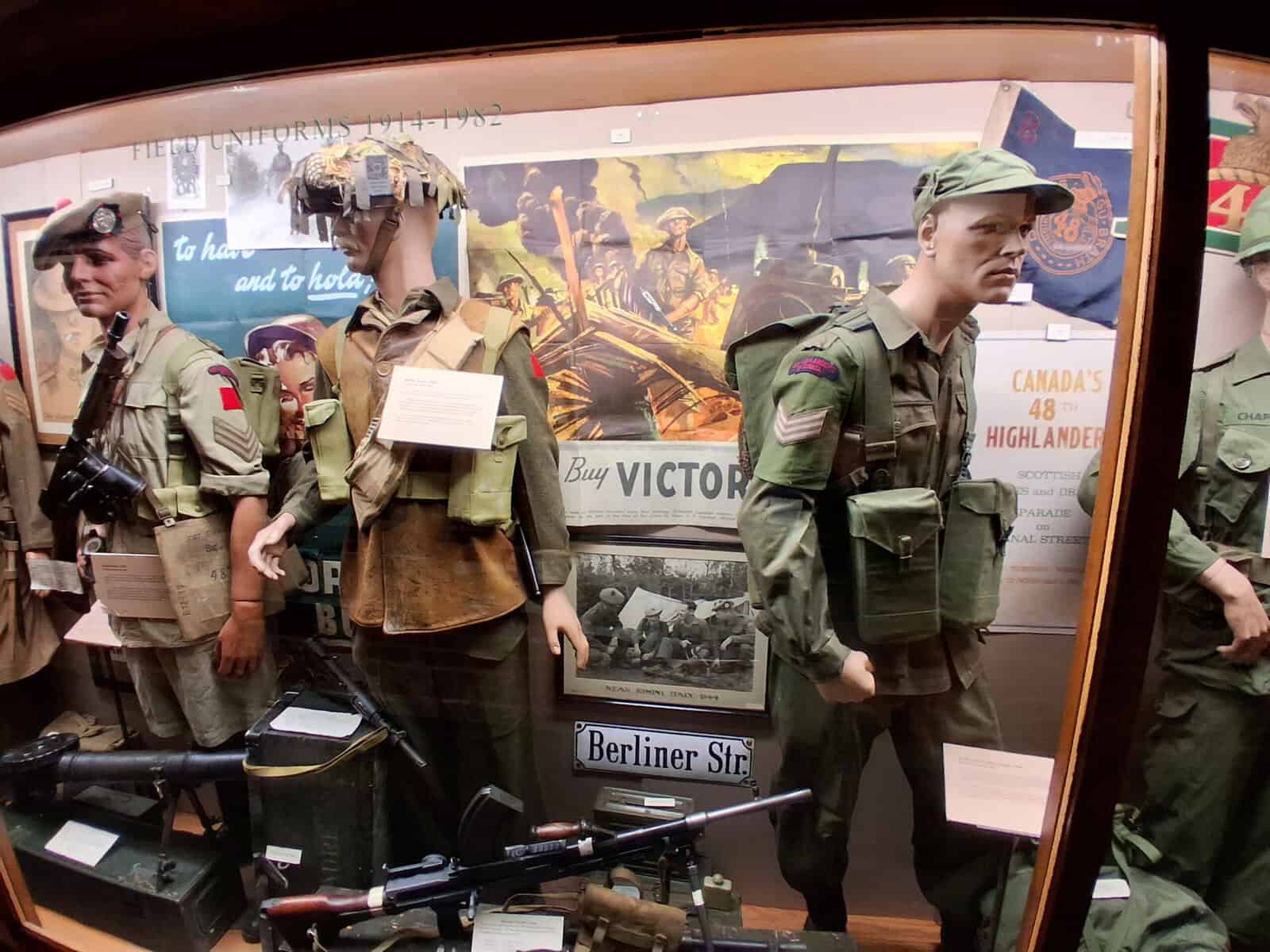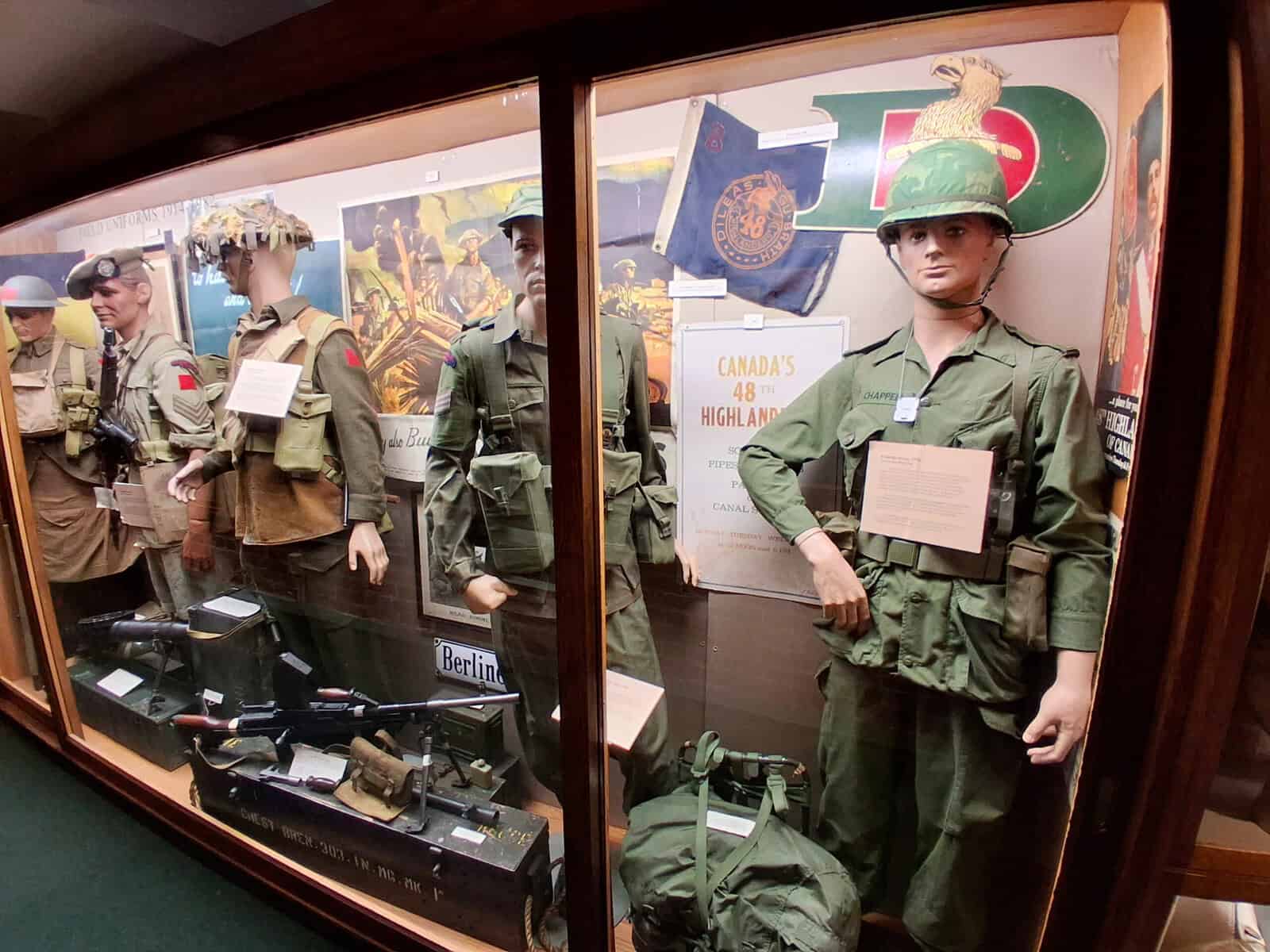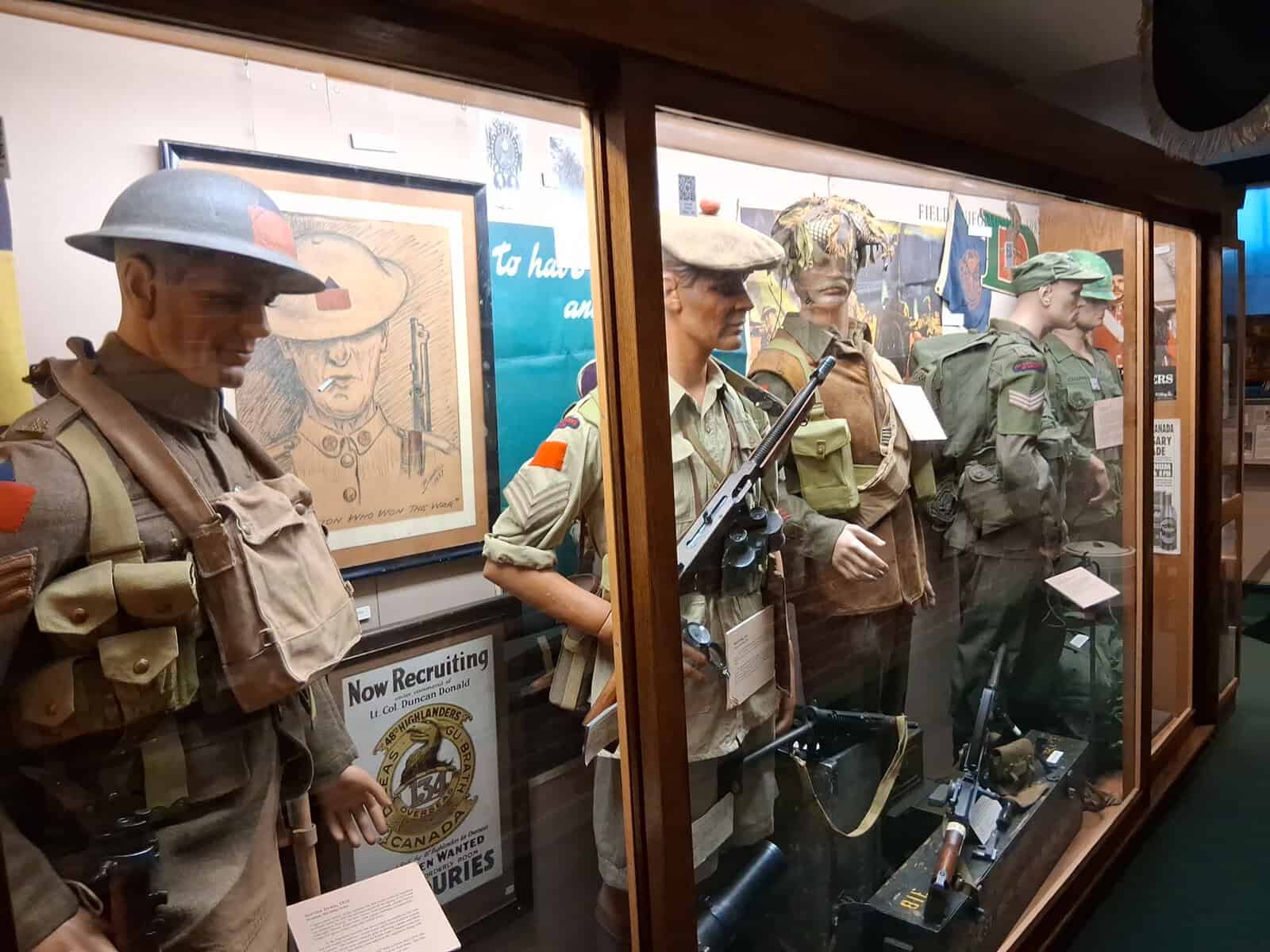

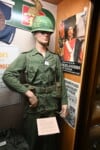
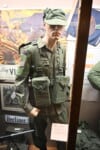
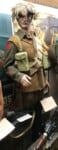
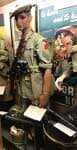

First World War: 1902 Pattern Service Dress
During the First World War, soldiers of the Canadian Expeditionary Force wore the British 1902 pattern service dress. This uniform was made of heavy wool, designed for warmth and durability in the trenches. It consisted of a wool tunic with a stand-and-fall collar, reinforced breeches, and puttees (strips of cloth wrapped around the leg from ankle to knee). The iconic Brodie helmet, a steel helmet designed to protect against falling shrapnel, was introduced in 1916. The uniform’s design, which included ample pockets, was a significant step toward a more practical field uniform. Highland units were entitled, if they chose, to wear their regimental kilt, covered by a kilt apron.
Second World War: 1937 Pattern Battle Dress and Marching Order Summer Dress
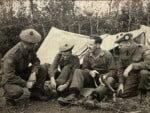
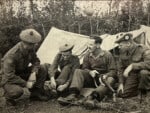
In the Second World War, Canadian troops adopted the British 1937 Pattern Battle Dress. This uniform marked a further evolution in combat attire, featuring a short wool jacket and matching trousers that provided greater mobility and comfort in the field. The accompanying webbing equipment was also updated to more efficiently carry essential items like ammunition, water, and entrenching tools. A Marching Order Summer Dress was issued just prior to the invasion of Sicily in August 1943, and continued until 1950.
Korean War: American-Supplied Uniforms
Following WWII, Canada’s uniforms continued to evolve, often reflecting a closer alignment with American military patterns. For the Korean War, Canadian troops were supplied with American M-1943 uniforms, which were made from lighter cotton materials better suited to the hot and humid climate. This transition was a result of logistical convenience and the need for a more versatile uniform than the wool Battle Dress.
1970s: Combat Dress (1964 Pattern)
In the 1960s, Canada developed its own uniform design, introducing the 1964 Pattern Combat Dress. This was the Canadian Army’s first domestically designed all-purpose combat uniform, made from a durable olive-green nylon-cotton blend. This uniform was highly practical, featuring a zippered shirt-coat and trousers with large cargo pockets. It was designed to support a new style of mechanized infantry warfare and marked a deliberate move away from British patterns towards a uniquely Canadian standard. The change also saw the end of puttees for the 48th Highlanders, who began wearing high-cut combat boots. The uniform was practical and durable, designed to support the new mechanized infantry role. This uniform was not issued to the Army reserves until 1972.
Weapons on Display
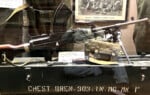
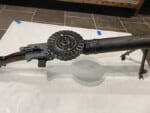
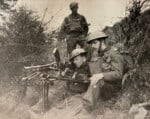
These include two “light” machine guns (they are carried and operated by one soldier): the Lewis 1914 Machine Gun Mk III, and a Bren Mk I machine gun used in WWII. The Lewis gun’s design, which included a bipod and a top-mounted pan magazine, allowed a single soldier to carry and operate it, which was a revolutionary concept for providing mobile, automatic firepower to infantry on the front lines.
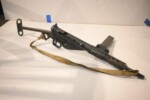
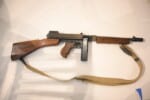
One of the standard rifles used during this period is the Lee-Enfield Short Rifle Mk III No. 1. The Lee-Enfield of a later pattern was used also during WWII. The display also features two submachine guns of WWII: a Sten Mk II and a replica of a Thompson 1921. Sub-machine guns are used in close quarter fighting: trenches and urban areas.