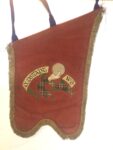
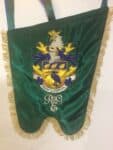
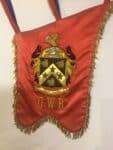
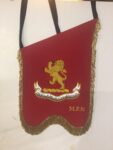
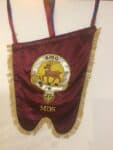

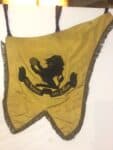
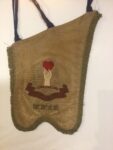
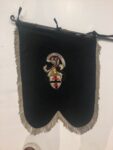




Pipe banners
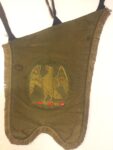
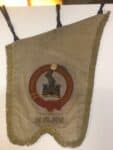
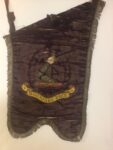
Pipe banners are a distinct and historically significant component of a military piper’s uniform, serving as a visual representation of a regiment’s history and honours. Made from heavy silk or velvet, they are rectangular flags that are attached to the bass drone of a set of bagpipes. The origins of these banners can be traced back to the traditions of military regiments, where they were used to identify a specific unit on the battlefield. The designs are rich with symbolism, featuring the regimental insignia, coat of arms, or a clan crest, often meticulously embroidered with gold or silver threads.
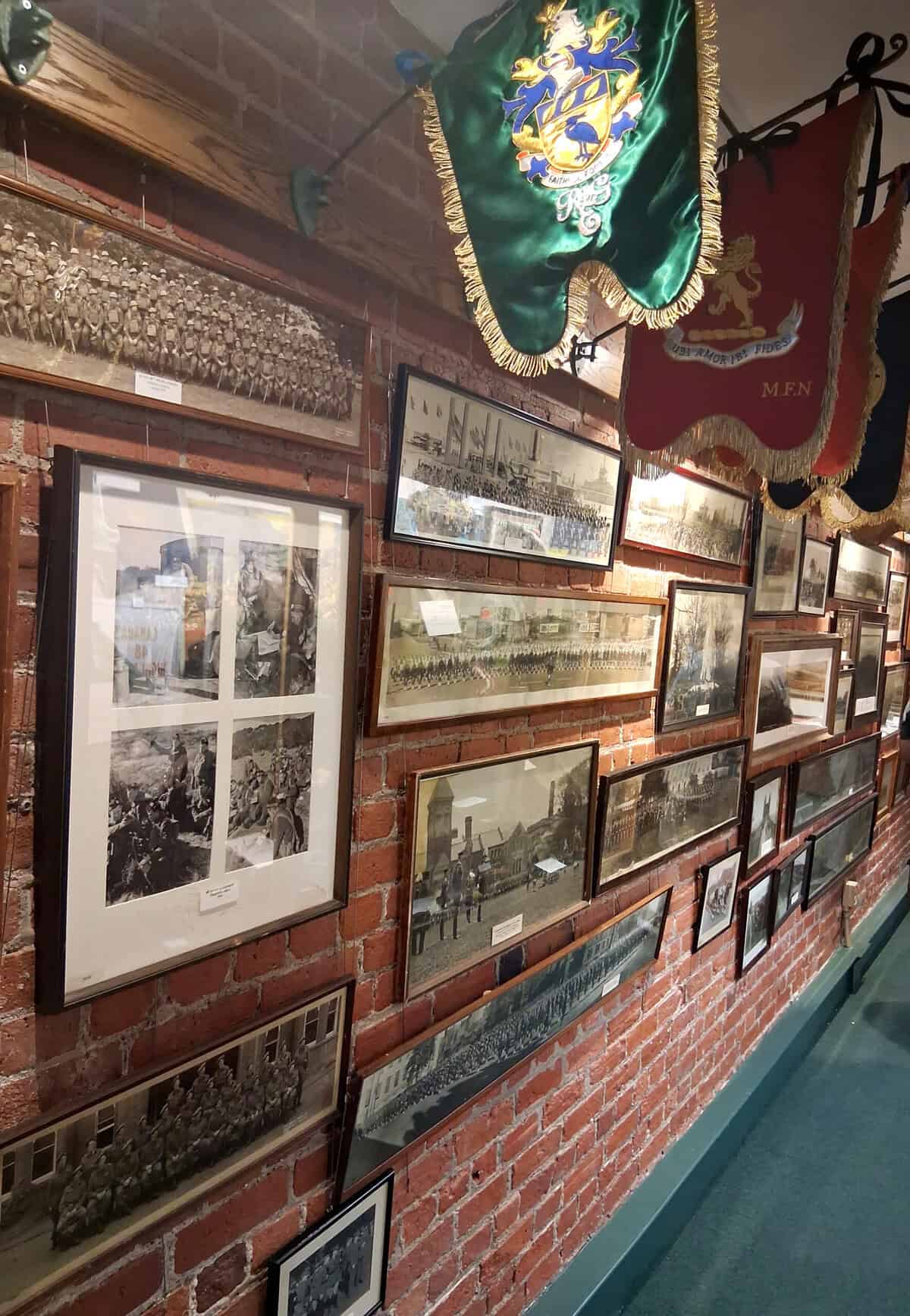
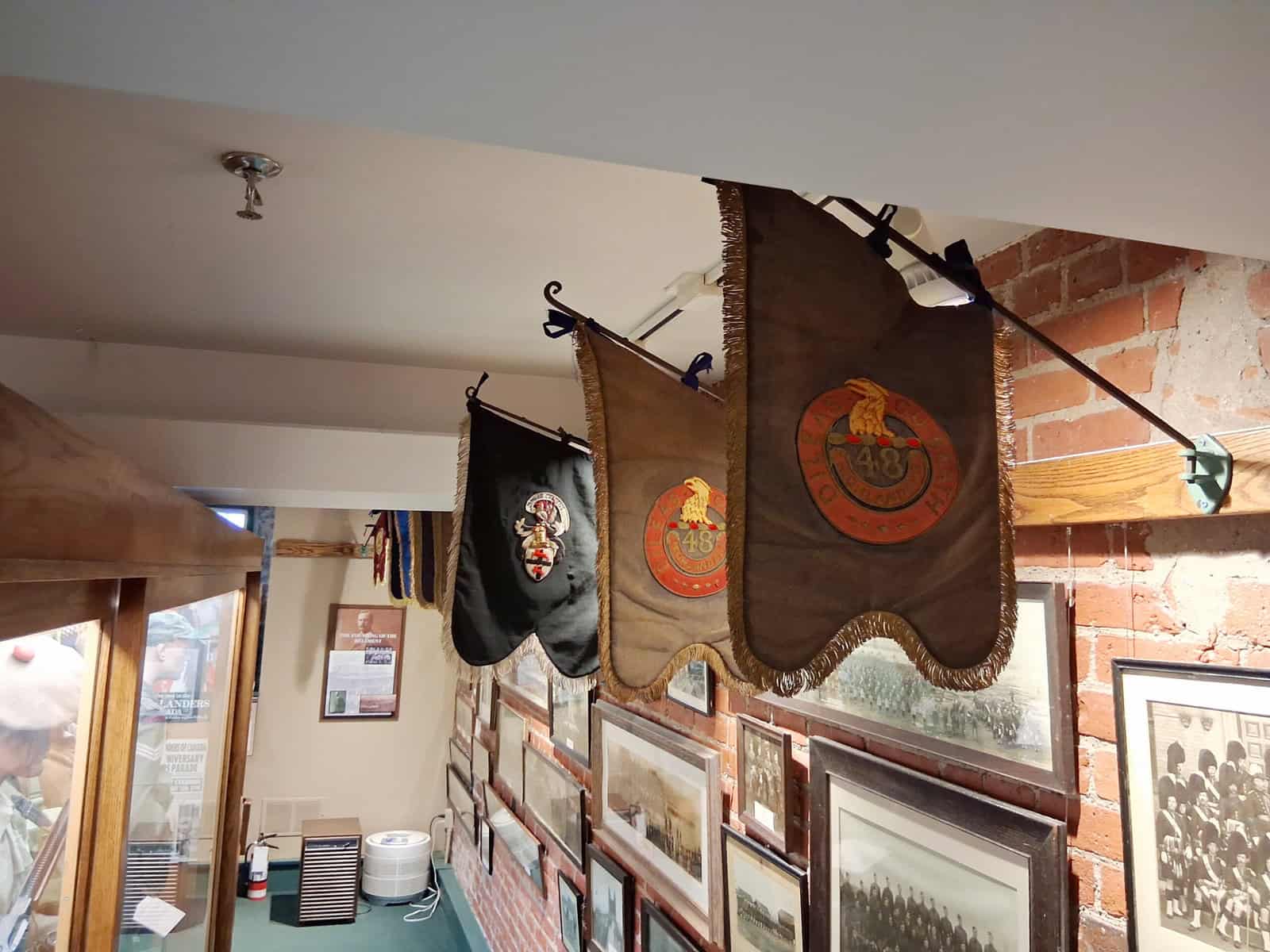
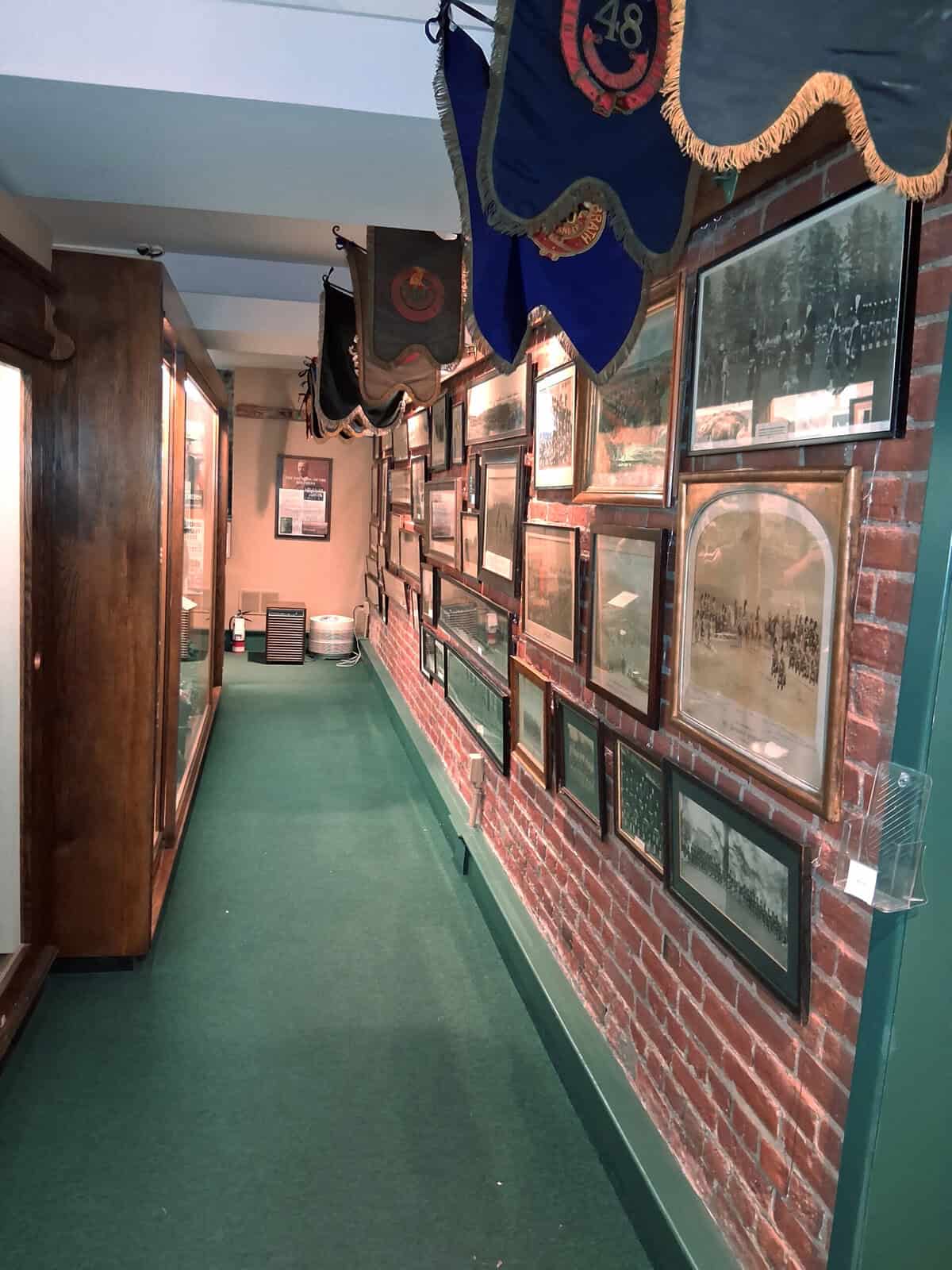
In the 48th Highlanders of Canada it is the custom that all Field Officers (Company Commander, usually a Major) or higher have a Pipe Banner that is carried by their Piper on parade. It is tied by ribbons to the base drone of a set of bagpipes. On the obverse side the Regimental Badge is displayed, normally on a field of Royal Blue. On the reverse side the personal arms, shield, helm, wreath mantling, crest, and motto as well as initials of the Officer is displayed on a field colour of that Officer’s choice. When not on parade Pipe Banners are hung in the Officers’ Mess.
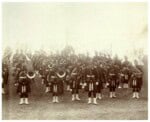
On parade, the Pipe Major carries “The Regimental Banner” which displays on each side the Sovereign’s and Regimental Colours. The second-in-command of the Pipe Band carries the Commanding Officer’s Banner on parade. The junior Piper on parade carries the banner of the Regiment’s first Commanding Officer, Lt-Col J.I. Davidson, VD.
There is another, more complete, display of pipe banners in the hallway of the Ante Room – away from the stairs.