
2 inch mortar bomb carrier
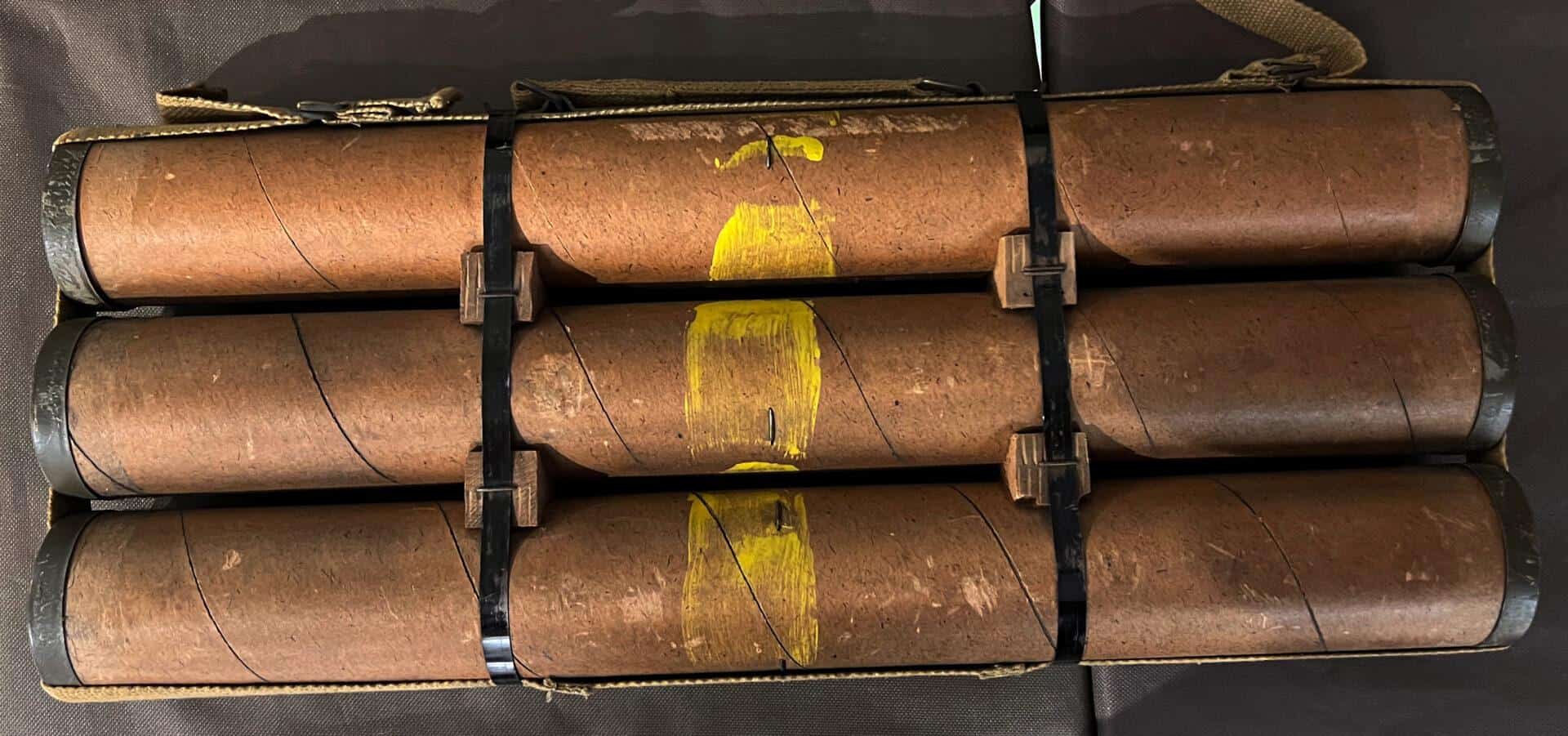
An 8 inch by 20 inch mortar bomb carrier case. Made from waxed cardboard, wood, canvas straps and tin caps. A case made to carry six 2″ mortar shells. The handle on this artifact is broken but if intact could be used to carry the case much like a briefcase of today. There is a […]
2 inch mortar bomb
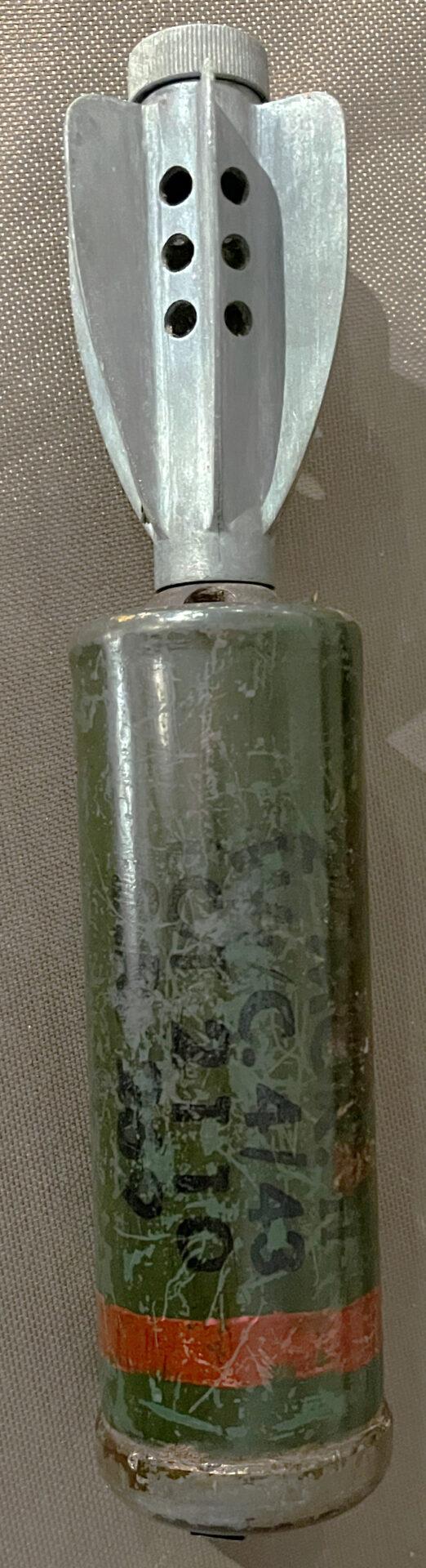
A 2 inch by 9.5 inch mortar shell marked with a Red Stripe indicating low explosive yield causing harm to near by soldiers but leaving most structures intact for friendly occupation. The printing on the shell represent manufacturer numbers and lots. The 2 inch mortar was carried within an infantry platoon for immediate and short […]
3 inch Mortar shell
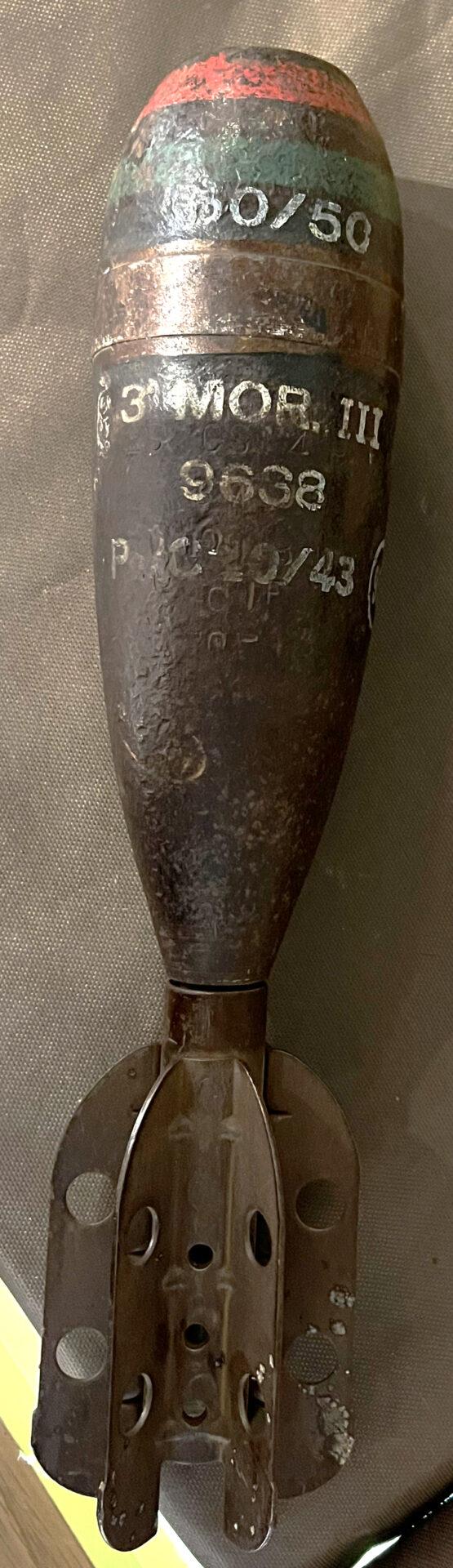
A 3 inch by 14.75 inch mortar shell marked with a Red Stripe indicating low explosive yield causing harm to near by soldiers but leaving most structures intact for friendly occupation. The printing on the shell represent manufacturer numbers and lots. The 3 inch mortar was carried by the Mortar Platoon of Support Company of […]
PIAT bomb
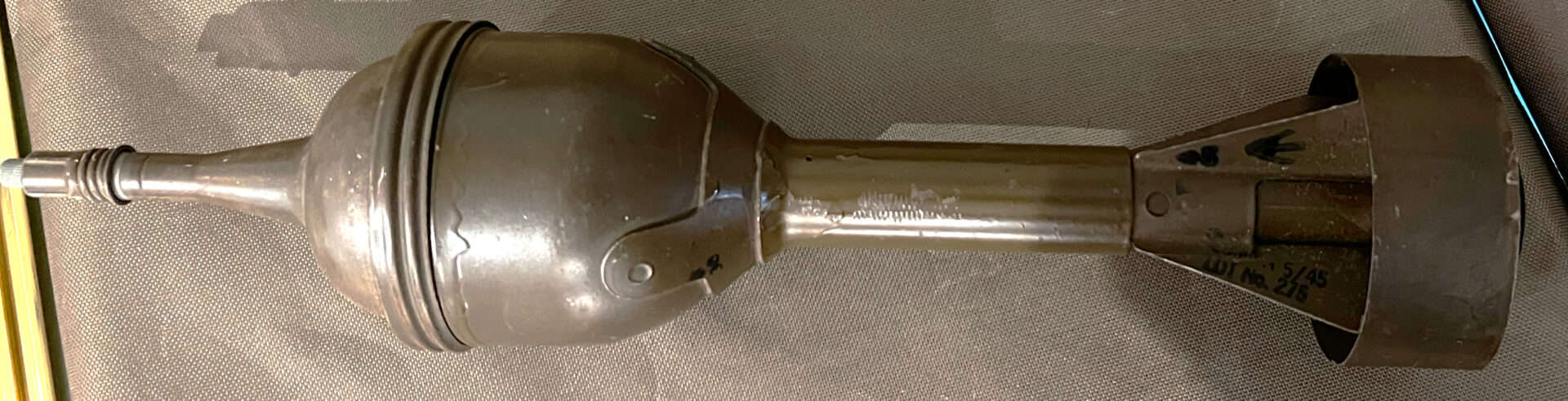
A 4 inch by 17 inch PIAT round. Painted brown indicating a low explosive charge meant to injure the armoured unit’s driver but allow the vehicle to be captured by friendly units. The Projector, Infantry, Anti Tank (PIAT) Mk I was a British man-portable anti-tank weapon developed during the Second World War. The PIAT was […]
Infantry Training Part IV: The mortar platoon
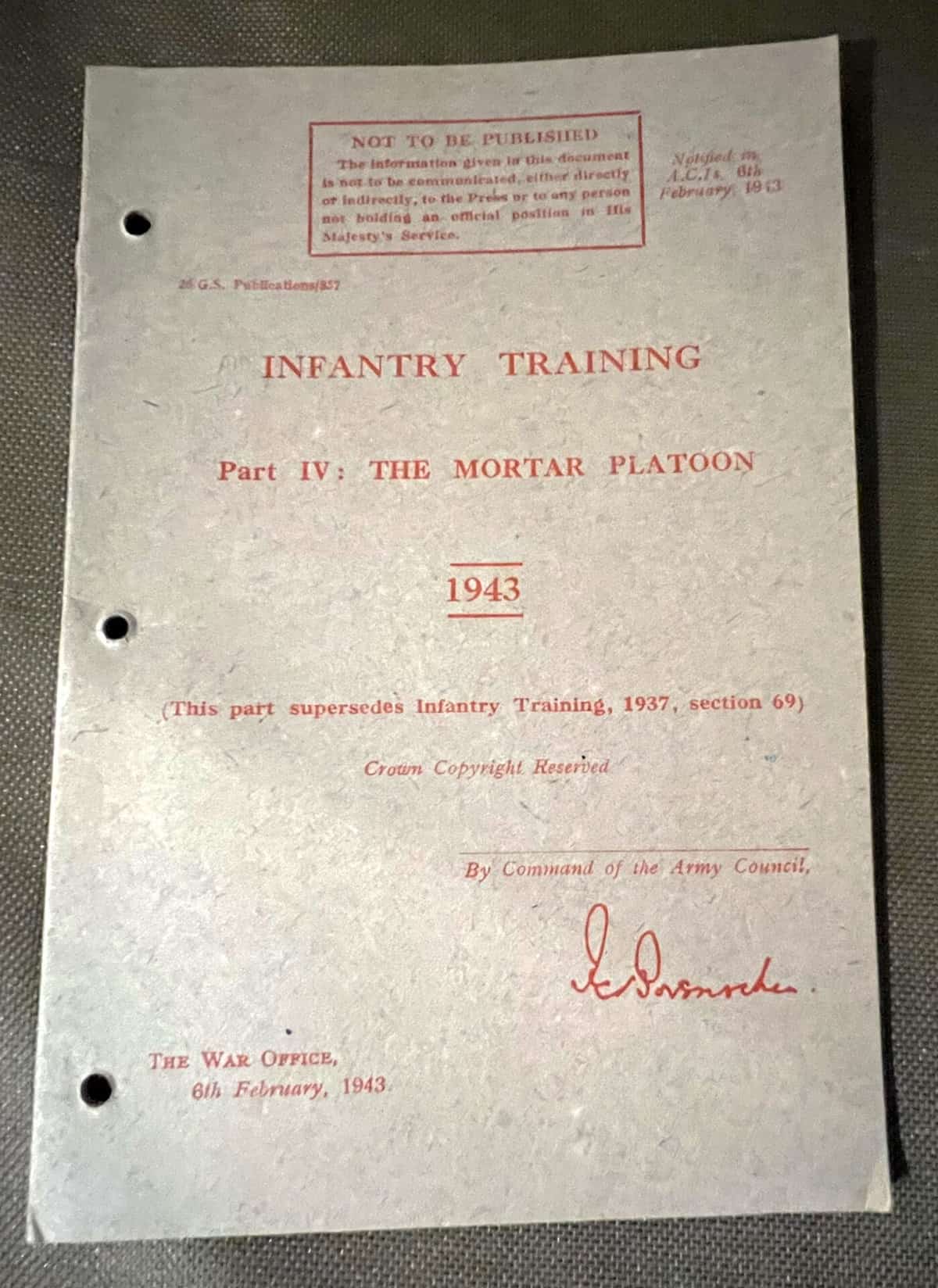
A 4.75 inch by 7 inch booklet on Infantry training procedures for mortar infantry units issued in February 1943. In the 1st Battalion, 48th Highlanders the Mortar Platoon was part of Support Company and employed 3 inch mortars.
Telephone Switch Board UC10 10Line Set 58 M768
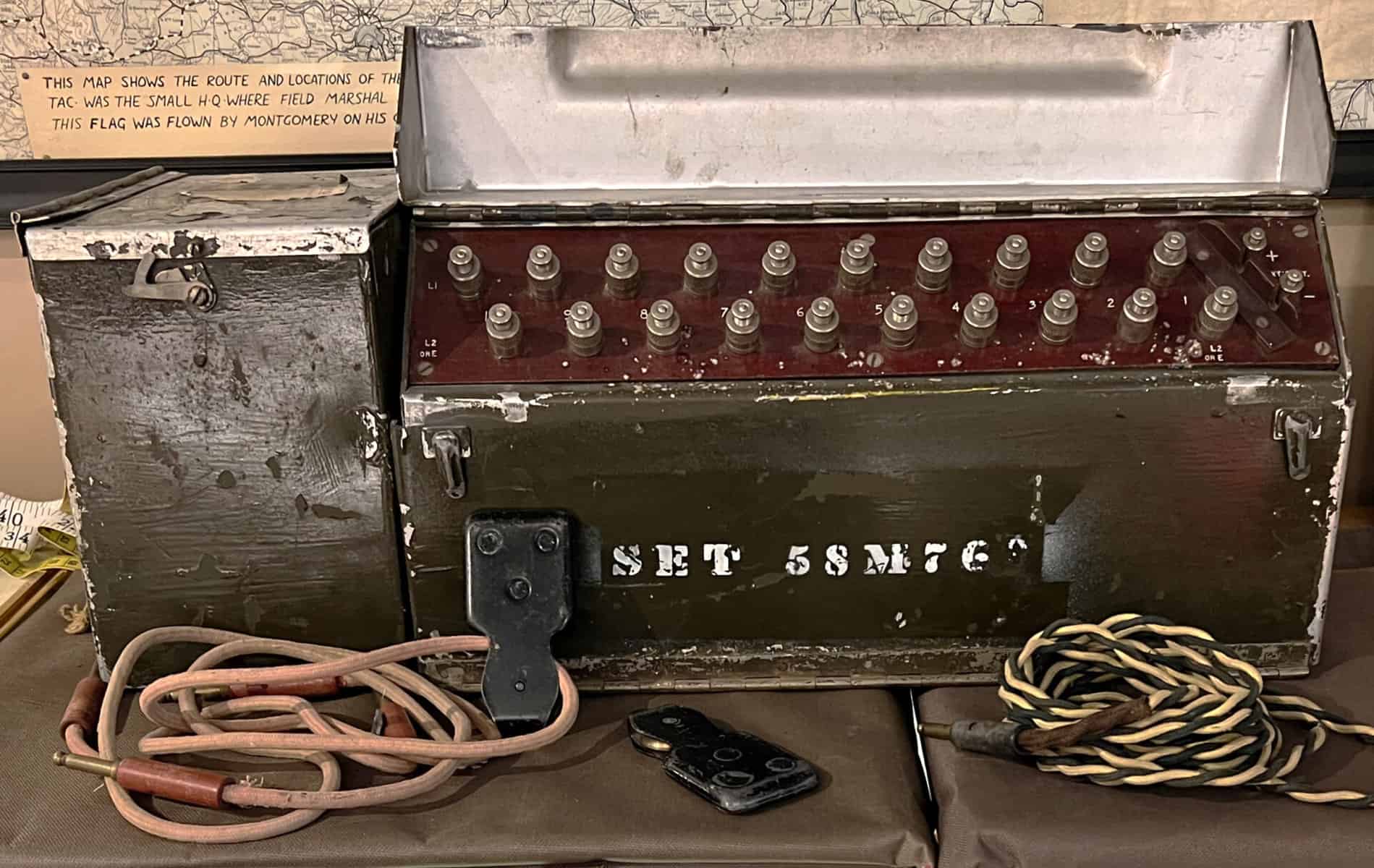
The Switchboard U.C. 10 is a 10-line Second World War era switchboard used to terminate tactical phone lines. The switchboard (U.C. standing for ‘Universal Call’) was designed for local office use or at Divisional Signals level and were used throughout the war and as late as the 1980’s in cadet corps. The unit is housed […]
2 Pounder Round
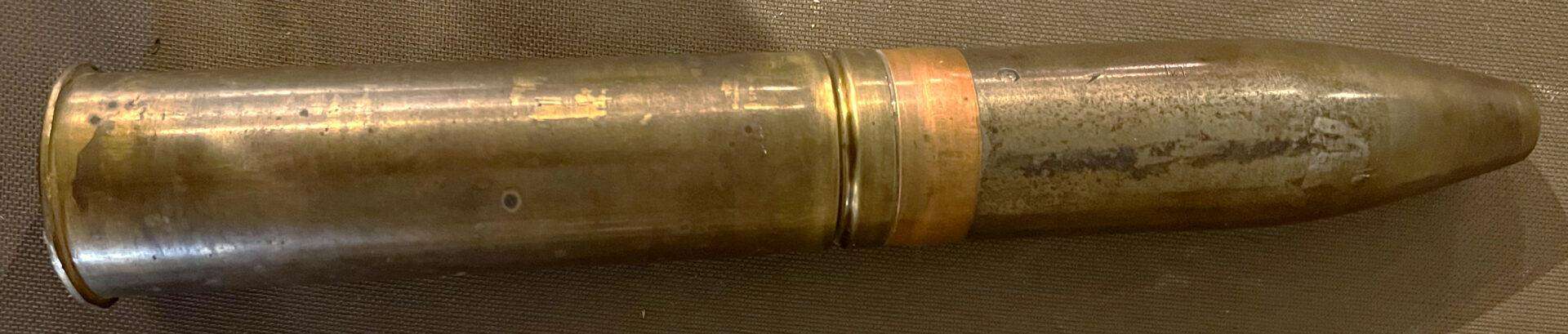
The Ordnance QF 2-pounder (QF denoting “quick firing”), or simply “2 pounder gun”, was a 40 mm (1.575 in) British anti-tank gun and vehicle-mounted gun employed in the Second World War. This round is 2 inch by 12 inch in size. It was the main anti-tank weapon of the artillery units in the Battle of […]
20mm round

A 20 millimetre by 120 millimetre round meant for anti-armour operations and missile defence systems. The Oerlikon 20 mm cannon is a series of autocannons, based on an original German Becker Type M2 20 mm cannon design that appeared very early in World War I. It was widely produced by Oerlikon Contraves and others, with various […]
German Anti Tank Round
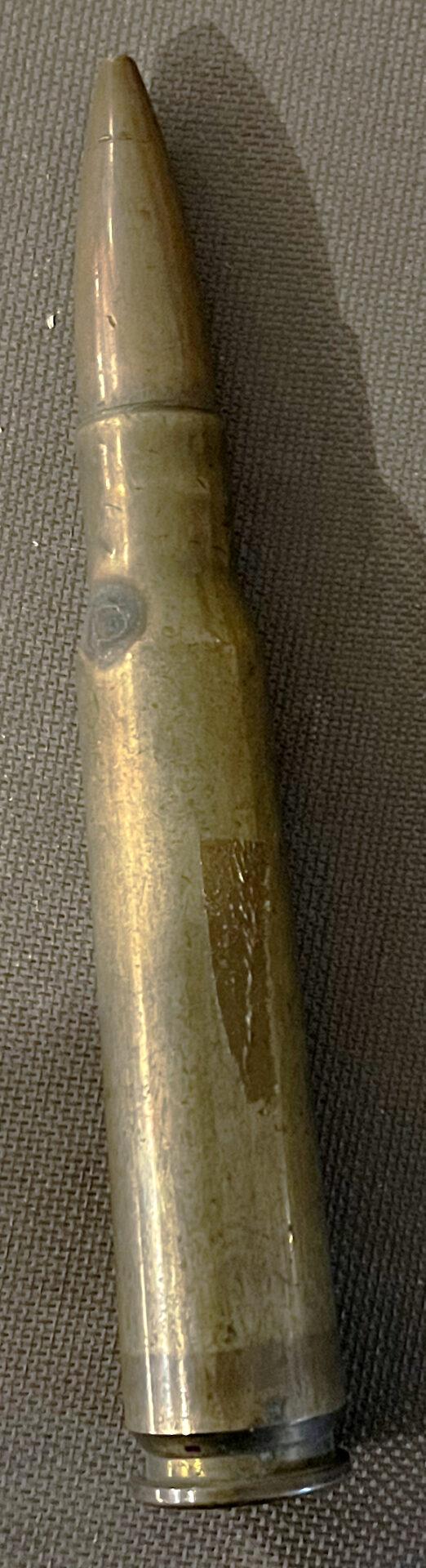
The Panzerbüchse 39, abbreviated PzB 39, (German: “tank hunting rifle model 39”) was a German anti-tank rifle used in World War II. It was an improvement of the Panzerbüchse 38 (PzB 38) rifle. This round is a 0.75 inch by 5.5 inch round. German anti-tank rifles originated back in 1917 with the Mauser 1918 T-Gewehr, […]
.55 Boyes Anti-Tank Round
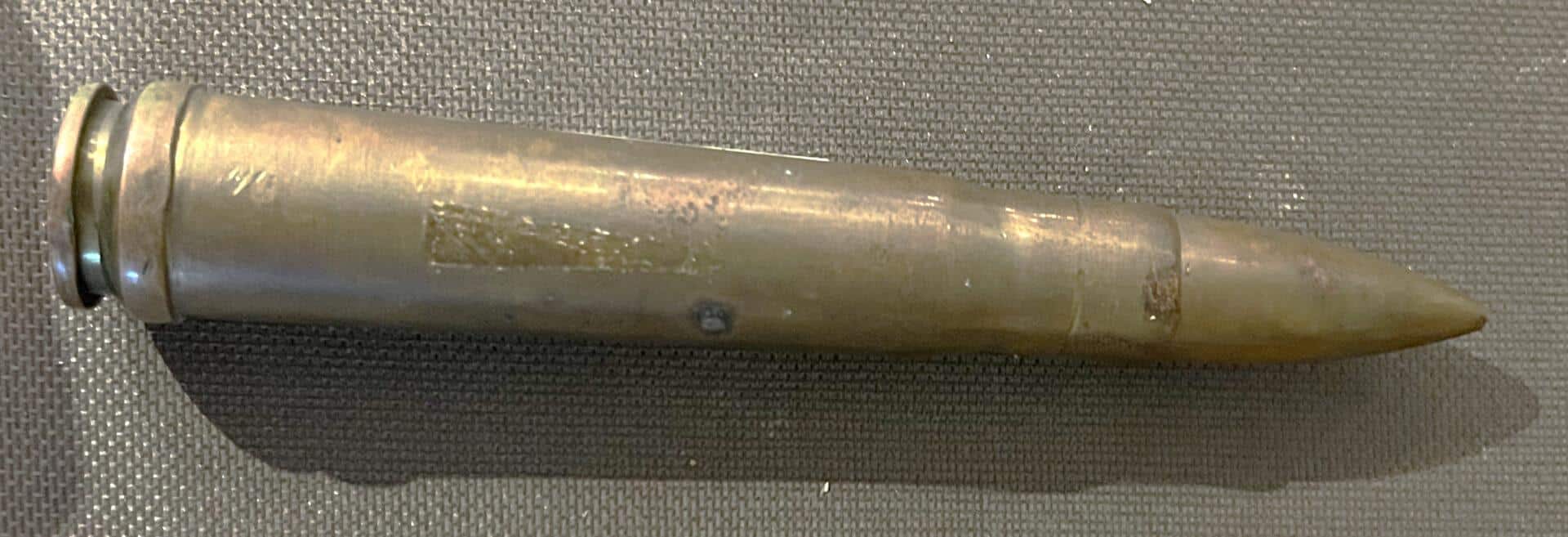
The .55 Boys (13.9×99mmB in metric) is an anti-tank cartridge used by the United Kingdom in World War II. It was designed for use with the Boys Anti-Tank Rifle. The Boys anti-tank rifle (officially Rifle, Anti-Tank, .55in, Boys, and sometimes incorrectly spelled “Boyes”), is a British anti-tank rifle used during the Second World War. It […]