

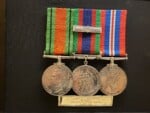
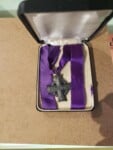
Captain Philip Frowde Seagram
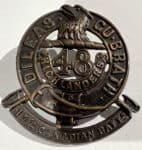
Seagram was the first officer of the 48th Highlanders to be killed during the Second World War, dying at age 30 on March 8, 1941. A proud member of the regiment, he first gained distinction as a young officer serving as Colour Officer at the 1934 Chicago World’s Fair.
Following the outbreak of war in September 1939, Seagram immediately volunteered for active service. In the UK, he commanded No. 7 Platoon and served as Gas Officer, once famously catching much of the battalion unprepared in a surprise gas drill. In 1940, he was appointed Aide-de-Camp to Lt. Gen. Andrew McNaughton, Commander of 1st Canadian Division, and accompanied him to France during the tense days surrounding the Dunkirk evacuation. In 1941, after completing the Junior Staff Course, Seagram was killed during the London Blitz when a bomb struck the Café de Paris. He was buried with full military honours at Brookwood Cemetery.
His brother, LCol J.E. Frowde Seagram, commanded the regiment’s 2nd Battalion during the war, continuing the family’s legacy of service.
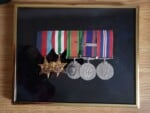
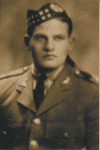
Lt Edward Martin MacLachlan
Lt. MacLachlan was killed in action on 15 July 1943 at the age of 23, the first 48th Highlander to be killed in action in WWII. Ed first served in the 2nd Battalion of the 48th Highlanders and enlisted for overseas duty on 22 December 1940. During the assault to take the town of Caltagirone, Sicily. Lt MacLachlan was given command of the carrier-borne recce party to feel out the road. After hitting a stone and cement barrier he signaled his platoon to hold back while he checked for mines.
“He decided, too quickly, that the road was clear. As his carrier started on again, it had to swing out to go around a wrecked German truck; he was waving his troop on when a mine exploded under him with a whomping roar. His carrier was hurled into the air. Lt. MacLachlan was killed instantly. So was his Sask; L.I. driver. That evening at sunset, Lt. MacLachlan was buried by Padre East under a group of olive trees inside the stone gate near where he was killed. His Sask. L.I. driver was buried beside him.” “Eddie MacLachlan had a simple war philosophy, said Padre East. He just wanted to get this ugly job done and then go home.”
Regimental History Dileas page 241
Lt. MacLachlan had three brothers, two of which served overseas; Captain Graham of the Royal Regiment of Canada who was appointed Lieutenant Colonel in 1947; Campbell who was a Lieutenant Commander in the Royal Canadian Navy and, his youngest brother David.