

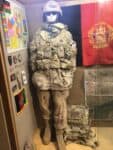
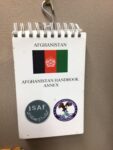

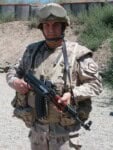
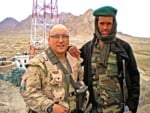
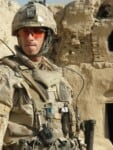
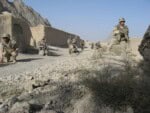
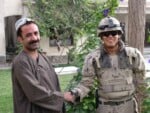
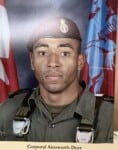
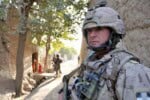
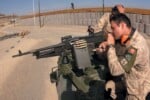

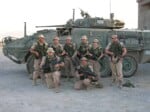





From 2001 to 2014, Canada contributed to international efforts in Afghanistan. Thousands of Canadian Armed Forces members deployed, including a significant number from the Reserve Forces including from the 48th Highlanders.
The 48th, like other Canadian Army Reserve units, played a crucial role in sustaining Canada’s commitment in Afghanistan. While the regiment didn’t deploy as a complete unit, its members volunteered individually or in small groups to augment Regular Force units. Reservists often comprised 20% to 25% of the total force, underscoring the “Total Force Concept,” where reservists are integrated to meet operational requirements alongside their full-time counterparts.
For the 48th Highlanders, deployments typically lasted 9 – 12 months. This included 3 -4 months pre-deployment training in Canada, 6 – 7 months in Afghanistan and 2 -3 weeks post deployment leave in locations like Cyprus or Kuwait. Reservists are paid Regular Force rates and have the same financial allowances, medical and other benefits. Many 48th Highlanders in Afghanistan contributed to Battle Groups, undertaking combat and security operations. Others served in Provincial Reconstruction Teams (PRTs), focusing on security and nation-building initiatives, or as part of Operational Mentor and Liaison Teams (OMLTs), training and mentoring the Afghan National Army and Police. Their duties ranged from dismounted patrolling and intelligence gathering to force-protection and supporting humanitarian efforts.
Deploying to Afghanistan presented unique difficulties and challenges for these reservists. Unlike their Regular Force colleagues, who are full-time soldiers, reservists balance military service with civilian careers, education, and family lives. Deploying meant putting their civilian lives on hold for nearly a year. While reservists train to the same high standard as Regular Force members, army units deploying to places like Afghanistan need extensive “collective” training to ensure sections, platoons and companies operate effectively together as a team.
Beyond the challenges of training and integration, reservists faced the same arduous conditions as all Canadian soldiers in Afghanistan: extreme heat, long hours, constant vigilance, and the psychological toll of operating in a complex and dangerous environment. Upon their return, reservists had the added complexity of transitioning back to civilian life while simultaneously processing their military experiences, sometimes with less robust post-deployment support than available to Regular Force members.
The dedication and sacrifices of the 48th Highlanders reservists were indispensable to the Canadian mission in Afghanistan. Their willingness to volunteer, adapt, and serve alongside their Regular Force comrades ensured continuous operational effectiveness. Their story is a testament to the enduring commitment of Canada’s part-time soldiers, who answered the call when their country needed them most.
