25 -

Rifles 1910 -1960

Location: In the south aisle away from the wall but near the Vimy Cross.

Artifacts

Below are the records relating to the artifacts in this display. Tap/click to open the detailed description. For some displays we have Recommended particular artifacts. 

ImageTitle
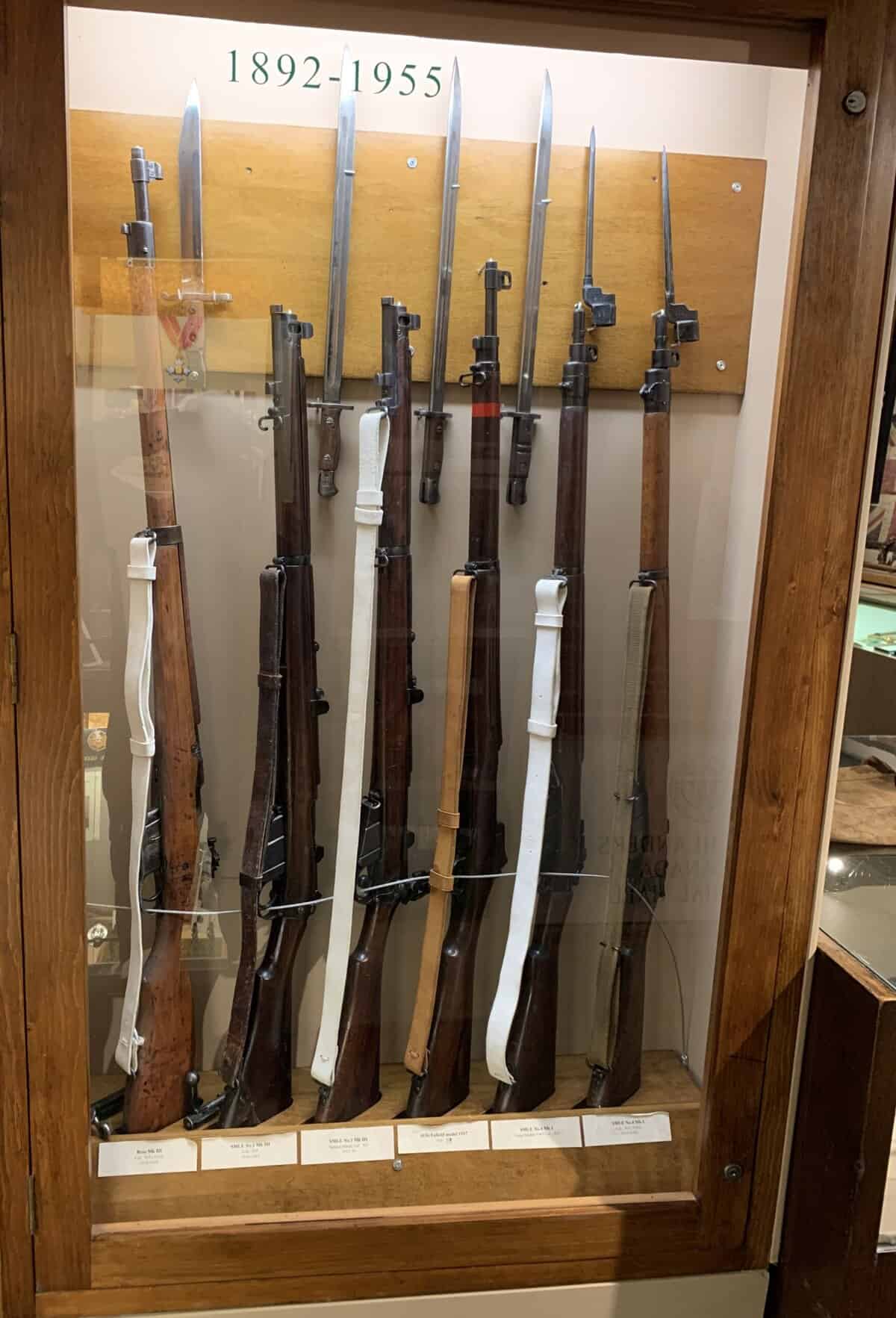
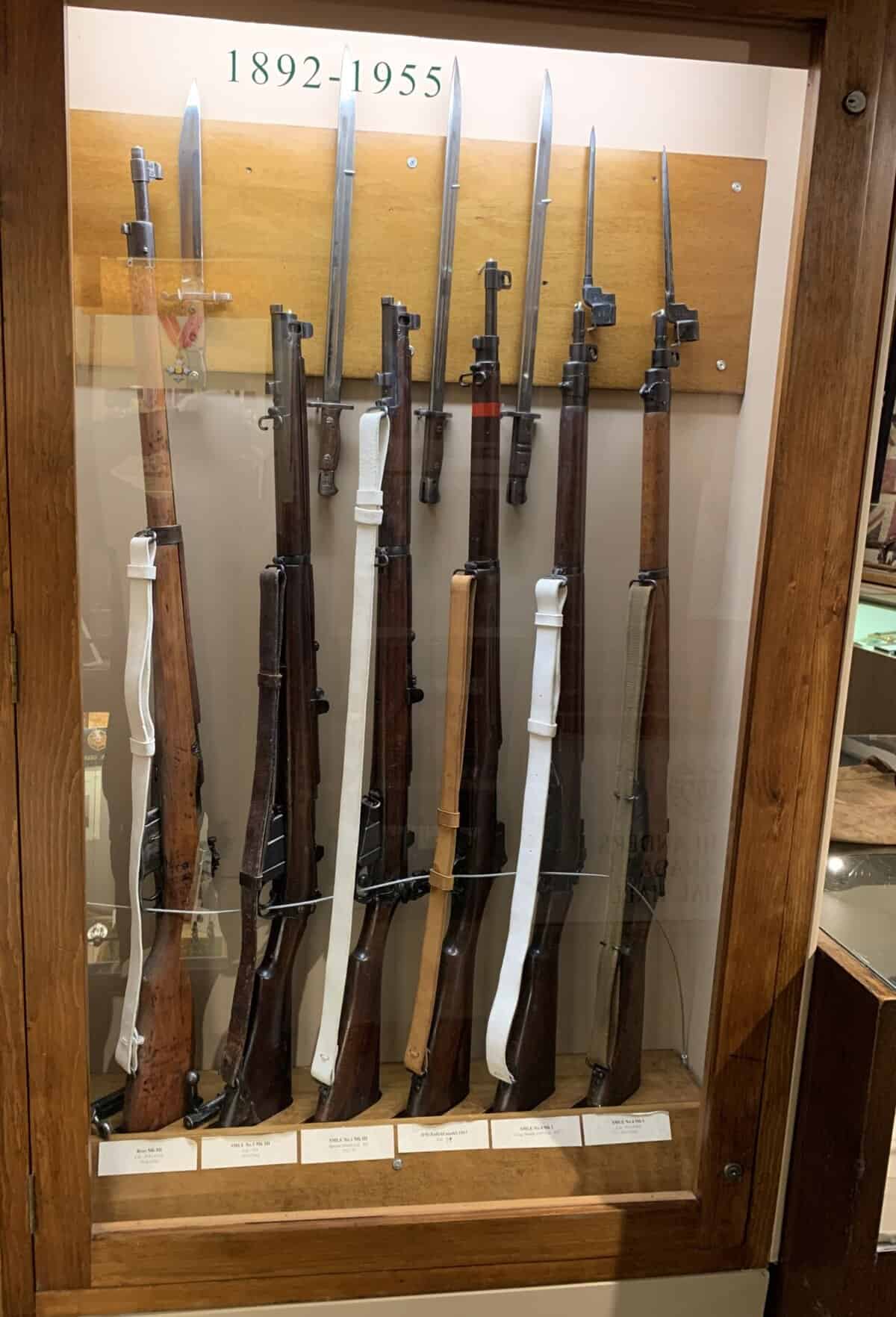
Lee-Enfield Short Rifle Mk III No. 1 1917
Ross MK III Rifle (M-10) 1916
SMLE No. 1 MK III Rifle (England 1918)
SMLE No. 4 MK I * 1943 Rifle
SMLE No. 4 MK I 1942 Rifle (England)
U.S. Enfield 1917 Rifle (Redband, Eddystone)

Audio guide

(73 seconds)

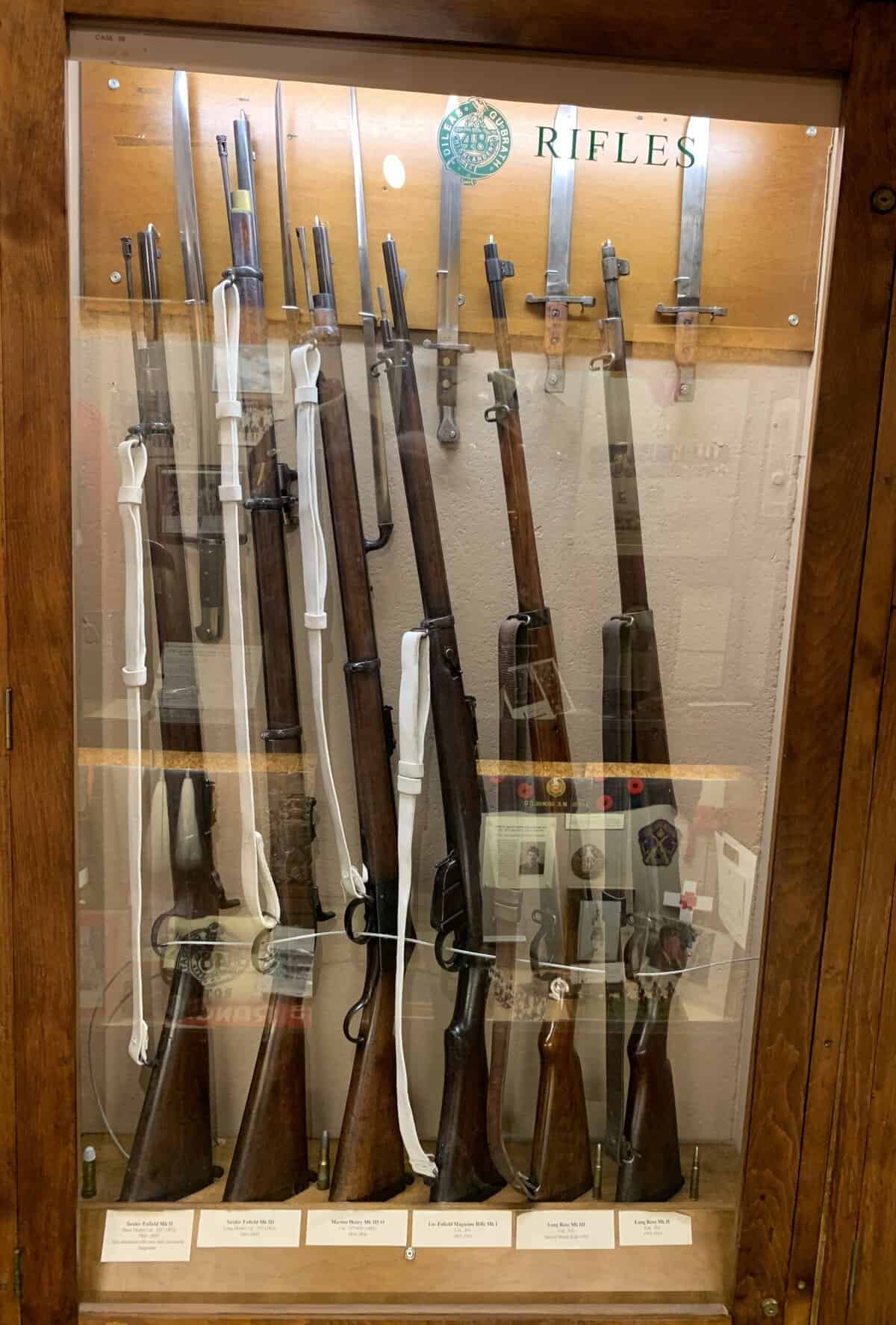
When the First World War began in 1914, the 48th Highlanders deployed overseas as part of the 15th Battalion, Canadian Expeditionary Force, initially carrying the Ross Rifle Mark III. Though the Ross offered excellent accuracy in controlled conditions, it proved disastrously unreliable in trench warfare—prone to jamming from dirt and difficult to operate under stress. After heavy criticism, the Canadian Corps replaced it in 1915–1916 with the Short Magazine Lee-Enfield Rifle (SMLE) Mk III, a robust, fast-cycling bolt-action rifle that quickly became a favourite among troops. The SMLE remained the mainstay Canadian service rifle through the rest of the war.

In the interwar years, the SMLE Mk III and Mk III* continued in militia training. During the Second World War, the 48th Highlanders were mobilized again, this time as part of the 1st Battalion, 48th Highlanders of Canada. They used the Rifle No. 4 Mk I, an evolution of the Lee-Enfield design, featuring a simplified rear aperture sight, improved accuracy, and easier mass production. The No. 4 accompanied them through Sicily, Italy, and Northwest Europe.

After 1945, the No. 4 remained in Canadian service, eventually phased out in the 1950s and 1960s by the FN C1, a Canadian-produced variant of the Belgian FN FAL, which was a semi-automatic, magazine-fed battle rifle chambered in 7.62×51mm NATO.
Rifles 1910 -1960

Audio guide

(73 seconds)

When the First World War began in 1914, the 48th Highlanders deployed overseas as part of the 15th Battalion, Canadian Expeditionary Force, initially carrying the Ross Rifle Mark III. Though the Ross offered excellent accuracy in controlled conditions, it proved disastrously unreliable in trench warfare—prone to jamming from dirt and difficult to operate under stress. After heavy criticism, the Canadian Corps replaced it in 1915–1916 with the Short Magazine Lee-Enfield Rifle (SMLE) Mk III, a robust, fast-cycling bolt-action rifle that quickly became a favourite among troops. The SMLE remained the mainstay Canadian service rifle through the rest of the war.

In the interwar years, the SMLE Mk III and Mk III* continued in militia training. During the Second World War, the 48th Highlanders were mobilized again, this time as part of the 1st Battalion, 48th Highlanders of Canada. They used the Rifle No. 4 Mk I, an evolution of the Lee-Enfield design, featuring a simplified rear aperture sight, improved accuracy, and easier mass production. The No. 4 accompanied them through Sicily, Italy, and Northwest Europe.

After 1945, the No. 4 remained in Canadian service, eventually phased out in the 1950s and 1960s by the FN C1, a Canadian-produced variant of the Belgian FN FAL, which was a semi-automatic, magazine-fed battle rifle chambered in 7.62×51mm NATO.

Gallery

Press or click to enlarge photo

Artifacts

Below are the records relating to the artifacts in this display. Tap/click to open the detailed description. For some displays we have Recommended particular artifacts. 

ImageTitle
Lee-Enfield Short Rifle Mk III No. 1 1917
Ross MK III Rifle (M-10) 1916
SMLE No. 1 MK III Rifle (England 1918)
SMLE No. 4 MK I * 1943 Rifle
SMLE No. 4 MK I 1942 Rifle (England)
U.S. Enfield 1917 Rifle (Redband, Eddystone)
↑
Subscribe
Notify me of
0 Comments
Oldest
Newest

Holiday closure

We will be closed on Saturday, July 25, 2026 and will reopen on Sunday, July 26, 2026.

While the museum is closed, our Digital Guided Tour is still open. It is the best way to explore the museum from home, with stories and context for selected displays.

You can also take our 360° Virtual Tour for a visual walk-through of the museum rooms and display cases.

We will try to respond to your email messages as soon as possible.